


July 13, 2026
From idea to impact: how Seeds & Growth for Media strengthens innovation in the Flemish media sector
How does the media sector continue to innovate in a world that is changing at lightning speed? For VRT, part of the answer lies beyond its own walls. Over the past three years, VRT Sandbox, VRT’s startup accelerator, has brought startups, creative entrepreneurs and media companies together through Seeds & Growth for Media to test, refine and, where possible, scale new ideas more quickly. The result? New forms of audience interaction for Sporza, experiments with artificial intelligence at Radio 1, and dozens of entrepreneurs who found their way directly into the Flemish media sector. More importantly, however, it has helped create a stronger media ecosystem in which innovation is given the opportunity to flourish more quickly.
An accelerator for innovation in the media sector
Having a good idea is one thing. Reaching the right media company to test that idea is often a very different challenge. That is where Seeds & Growth for Media aims to make a difference. The programme is an initiative of VRT Sandbox, Future Media Hubs, Medianet Vlaanderen and Thomas More, made possible with the support of VLAIO and the Flemish Department of Culture, Youth and Media. Seeds & Growth for Media connects young entrepreneurs directly with media companies such as VRT, DPG Media, Play Media, Mediahuis, Roularta and Studio 100.
“For startups, it is often difficult to know who to contact. Through the programme, they have the opportunity to present their idea directly to the right people. This allows them to discover much more quickly whether there is a genuine need for their solution,” says Mathias Teuwen, Project Coordinator of Seeds & Growth for Media.
At the same time, media companies gain access to a continuous flow of new ideas, technologies and creative concepts. “We strongly believe in testing fast and learning fast. By collaborating with startups, you can make new developments tangible much more quickly. You discover faster what works, but also what does not work. And that is equally valuable. At VRT, these tests do not start from ‘an interesting tool’, but from a clear question: what problem are we trying to solve, for whom, and with what impact? Every test is given clear success criteria upfront and an internal owner who helps guide the process and make decisions. This allows us to learn faster, but also to stop faster when the fit with VRT’s workflows, data or operational requirements proves insufficient,” he adds.
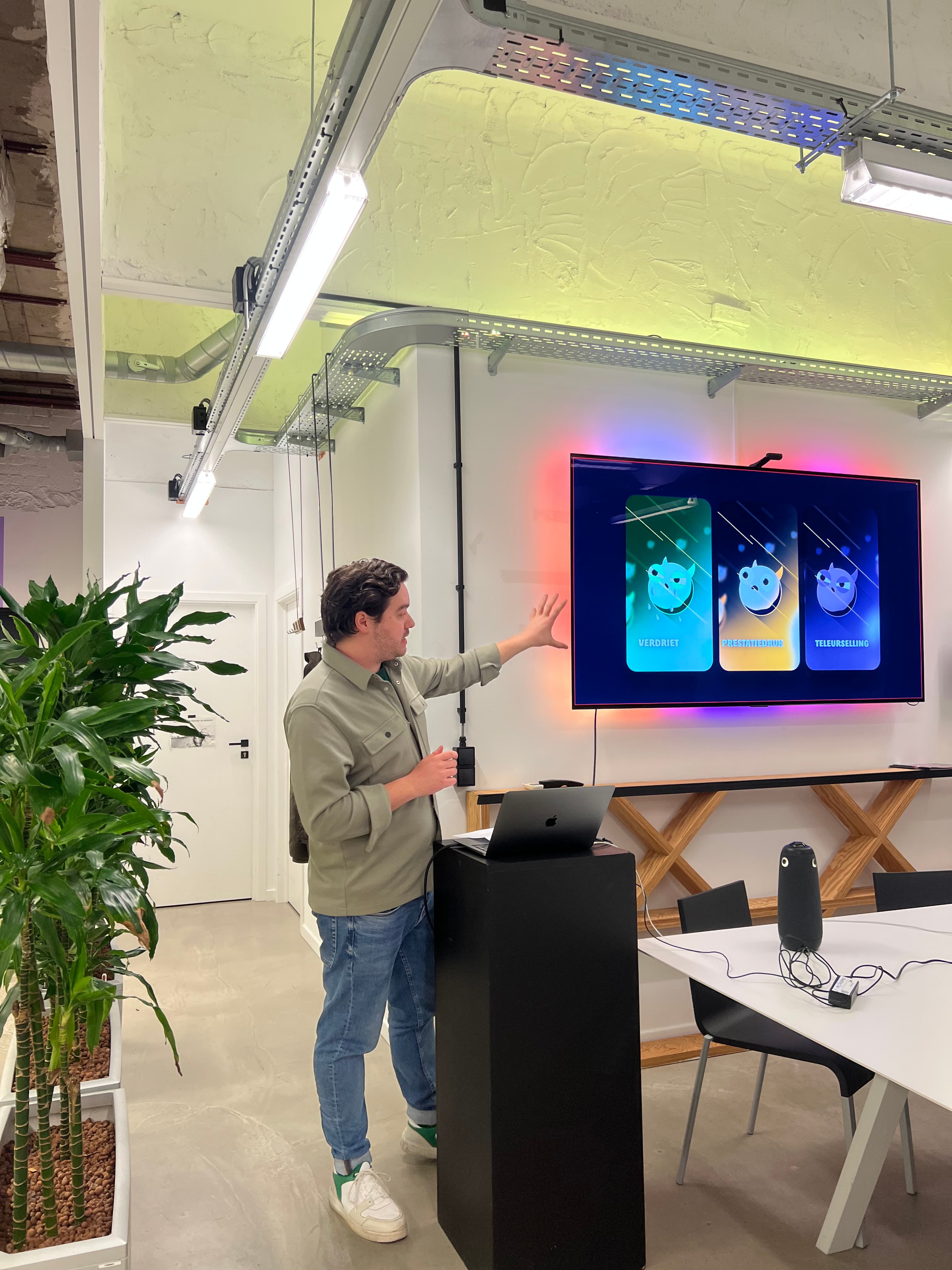
Three years of Seeds & Growth for Media in numbers
109 applications over a three-year period
64 entrepreneurs selected for the accelerator programme
192 introductions facilitated with VRT, DPG Media, Play Media, Mediahuis, Roularta, Studio 100 and De Mensen
From a startup idea to a live audience experiment
This rapid testing approach has already delivered tangible results within VRT.
In 2025, Sporza explored how viewers could become even more actively involved during Tour de France broadcasts. Through WhatsApp, fans were able to ask questions, participate in polls and respond to key moments in the race. All of this was powered by the technology of a Belgian startup.
In 2026, another Belgian startup created a digital replica of the Andermanszaken Festival in Antwerp. This enabled viewers of Kamal Karmach’s programme to revisit inspiring presentations digitally, weeks after the physical event had taken place. It also offered an interesting opportunity to explore how partners can be made visible in a smart and relevant way to the programme’s entrepreneurial target audience.
“The beauty of this kind of collaboration is that you are not only bringing in a technology. You also gain access to the expertise and creativity of the entrepreneurs behind it,” says Teuwen. “They often bring fresh insights into how to build a community and engage people. A successful test is not the end point. VRT Sandbox helps make the path towards adoption more concrete: what is needed to integrate a solution, which teams will take ownership and what is the best next step? Will VRT purchase the technology, continue developing it together with the startup, build it in-house or decide to stop altogether? Thanks to this approach, promising experiments have a greater chance of growing into solutions that create real value for the organisation.”
What artificial intelligence can mean for newsrooms
Not every innovation is visible on television or online. Some experiments take place behind the scenes but can have a major impact over time.
One example is the collaboration between VRT, the Leuven-based company ScribeWave and the Radio 1 social media team on the smarter processing of audio content using artificial intelligence. The ambition was to convert radio broadcasts and podcasts into transcripts, clips and social media content more efficiently.
For editorial teams that process large volumes of audio every day, this can represent a significant saving of time. The experiment did not immediately lead to a final solution, but according to Teuwen, that does not make it any less valuable.
“Innovation sometimes also means discovering that something is not yet fully ready for use. Even then, you learn an enormous amount. You gain insight into what you need, which functionalities are important and what to pay attention to in the future,” he says.
These kinds of experiments are never carried out randomly. VRT Sandbox organises tests in a controlled environment, with close attention to data, security, compliance and editorial context. This allows teams to explore new possibilities more quickly, without unnecessary risks or unrealistic expectations about what is already production-ready.
Why experimentation is essential
Perhaps the most important lesson from three years of Seeds & Growth for Media is that innovation begins with a willingness to experiment. Not every idea turns into a long-term collaboration. Not every test becomes a success story. However, every experiment generates insights that help organisations make better decisions.
As a result, VRT can more quickly determine which digital solutions and audience-facing applications should move forward and which should deliberately be discontinued. For VRT, this also means consciously creating space for innovation. “Running a test requires time and commitment from editorial teams and employees. But it is precisely by trying new things from time to time that an organisation continues to learn and evolve,” says Teuwen.
Not only technology, but also new content ideas
Although artificial intelligence, automation and digital platforms often attract the most attention, Seeds & Growth for Media is not exclusively focused on technology.
Creative entrepreneurs with new formats, storytelling approaches or content concepts are also given the opportunity to present their ideas to media companies. After all, the future of media will not only be shaped by new tools, but also by new ways of telling stories and reaching audiences. This combination of technological and creative innovation makes the programme unique within the Flemish media landscape.
Strengthening the Flemish media ecosystem
For VRT, the impact of Seeds & Growth for Media extends beyond its own organisation.
By bringing startups, entrepreneurs and media companies together, the programme contributes to a stronger and more innovative media ecosystem in Flanders. Ideas are given opportunities more quickly, entrepreneurs find their way to the market faster and media companies can respond more rapidly to new developments.
This perfectly reflects the role VRT seeks to play as a public broadcaster: not only innovating itself, but also helping to shape the future of the Flemish media sector.
A follow-up for Seeds & Growth for Media
Although the current programme ends in July 2026, plans for its next chapter are already underway.
VRT Sandbox is currently working on a successor initiative together with Flanders Game Hub. The ambition is to provide even better support for entrepreneurs in the media, creative and gaming sectors and guide them, through a single point of entry, towards the most appropriate support programme.
“The past three years have demonstrated just how much talent exists in Flanders. Year after year, we have seen new entrepreneurs emerge with surprising ideas. That gives us a great deal of confidence for the future,” concludes Teuwen.


